Exhibition opuscule
Correspondences
Essay by Marie-Eve Beaupré
Guido Molinari Foundation, 2024
English/French, colour, ISBN: 978-2-9819483-8-0
Link to essay

Correspondences
Essay by Marie-Eve Beaupré
Guido Molinari Foundation, 2024
English/French, colour, ISBN: 978-2-9819483-8-0
Link to essay
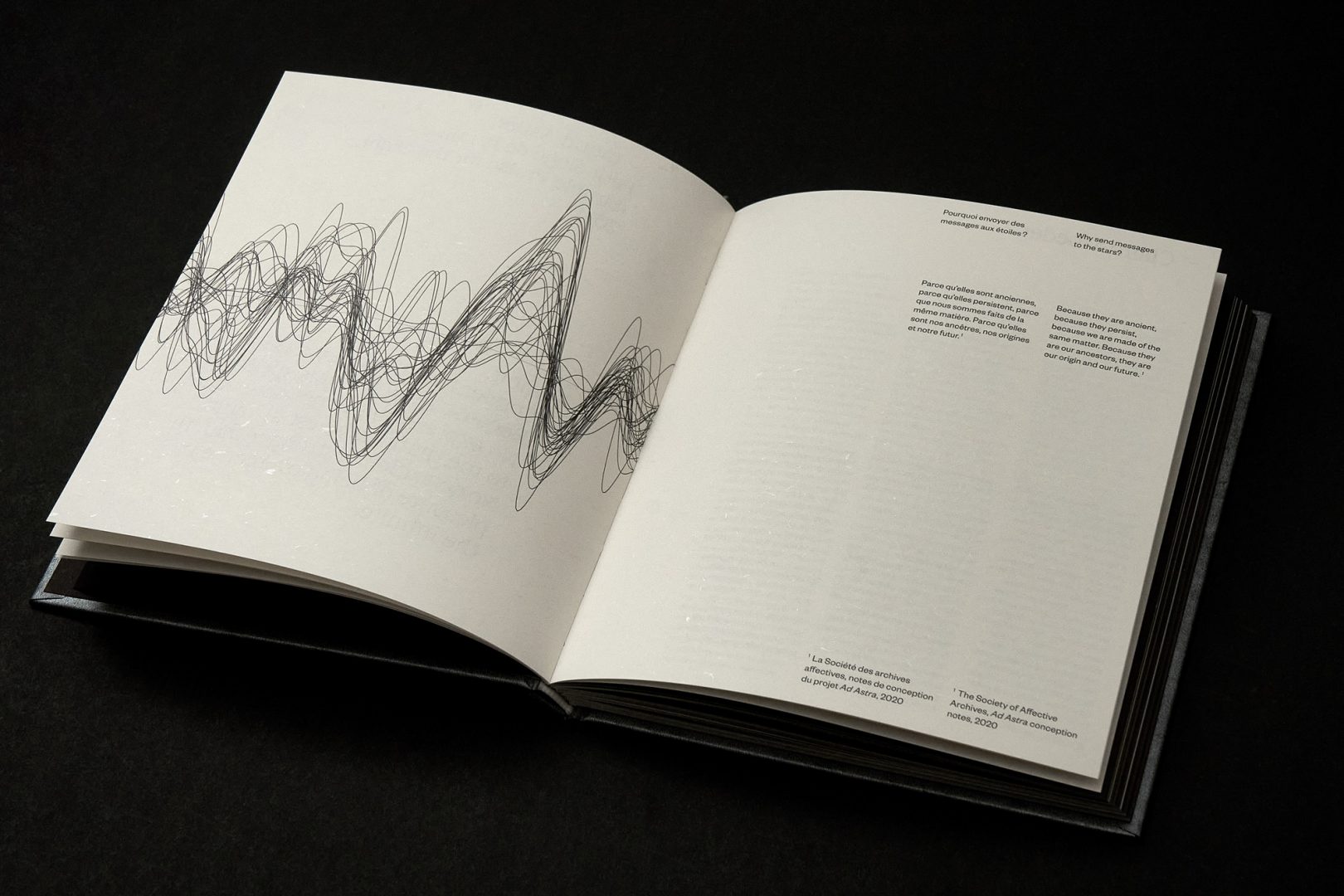
Ad Astra
The Society of Affective Archives, 2021
Essay by Claire Moeder
Graphic design by Criterium
English/French, 136 pages, offset colour, hardcover
Edition size: 250 (numbered edition)
ISBN: 978-1-77136-973-2
Photographic documentation by Daphnée Rouleau
More information
“Why send messages to the stars? Because they are ancient, because they persist, because we are made of the same matter. Because they are our ancestors, our origin and our future.”
“Like a spell or invocation, lullabies are a set of repeated words and lulling rhythms. Incantations intended to send children to sleep, they are by nature soothing and hypnotic, inducing shifts of consciousness. Across all corners of the world since time immemorial, lullabies have acted as portals into the dream world. Tender, intimate, and coded with folklore, lullabies occasionally recount surprisingly dark stories, embedded within a melodic suggestion of abandon… The origins of this project trace back to San Romano, Italy, where Annis began recording lullabies with various members of the community. For the following two years, the artist continued to record lullabies in Canada and abroad while developing parallel projects. Over time, her collection has grown to include a diversity of voices and languages. Gathered together in this immersive installation, the multiple voices “a thousand times whispered” create a soft murmur, from which the title of the exhibition, Mormorii, takes its name.”
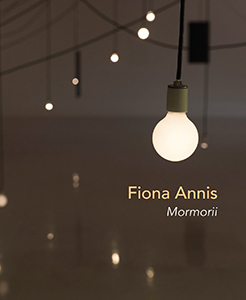
« … l’attention portée par l’artiste aux propriétés physiques du son et de notre propre corps dans l’espace, aura soutenu un passage de l’oralité à l’auralité, de la voix à l’oreille, pour mettre ainsi l’accent sur ce qui est transmis par l’écoute, la répétition et la mémorisation. À activer nos sens de la sorte, et considéré la charge émotive des chants entendus, c’est tout le corps qui se met à vibrer au sein de cette installation, traversé par un doux frisson.»
Link to review
«… bien que Fiona Annis partage avec Kander un point de vue romantique du chaos, elle ne se contente pas d’en sublimer le paradoxe, elle le performe pour en tirer les potentialités créatrices. Située à Maria, l’installation poétique Perdre le nord (2018) rassemble diverses images abstraites qui s’illuminent à la tombée du jour. Des images ont été obtenues par manipulations directes du papier sensible en chambre noire provoquant ainsi des failles à la surface. Comme le suggère Claire Moeder : « Chaque faille évoque une nouvelle lecture du monde, traversée par les processus de destruction et de création ». L’idée d’une destruction créatrice s’exprime aussi par des citations puisées dans L’écriture du désastre de Maurice Blanchot apposées sur d’autres images dont le motif est une constellation formée de diagrammes de la NASA sur le réchauffement climatique. De toute évidence, l’artiste assigne au chaos un potentiel d’activation des possibles et une poétique de la transformation fort inspirante.»
“The new works of artist and photographer Fiona Annis exhibited here offered viewers a truly sublime haunting, an invitation to partake in a séance with the ghost of photography’s past and portents of its future. Employing antiquated photographic processes, primarily the wet-plate collodion technique characterized by hand-processed photographic plates coated with chemistry that Annis mixes herself according to recondite 19th century recipes, she invokes the noumenal and the spectral in her continuing investigation into light and temporality.”
« Avec l’exposition Mormorii, Fiona Annis présente le fruit d’une recherche où l’altérabilité des mémoires et l’idée de marge agissent comme des fils conducteurs, auxquels se mêlent des accents de mystère et de songes. »
« À travers chacun de ses spectres, de ses matérialisations d’images astronomiques, antiques et évanescentes, Fiona Annis offre une existence possible à un récit impossible. Peu importe que l’imagerie soit placée sous le joug d’une catégorie scientifique ou spirite, elle nous soustrait de la véracité optique pour nous ramener dans l’empire des fantômes. Entouré des présences spectrales, glissé le long de la trajectoire d’une comète, notre œil peut dès lors dériver là où la photographie n’entend plus être soumise au témoignage de la réalité matérielle, mais où elle se dérobe pour figurer les invisibles et infiltrer l’imperceptible. »
Link to publication
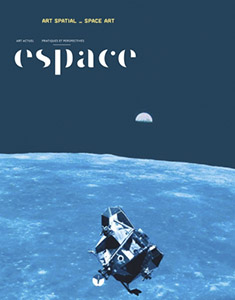
“Annis’s exploration of obsolete photographic techniques informs her work in a variety of media beyond photography, unlocking visual secrets that might otherwise be lost. The stars are dead but their light lives on is a manifestation of Annis’s continued curiosity in the way the past inhabits the present and her interest in remnants that are left behind, only to be rediscovered.”
Link to publication
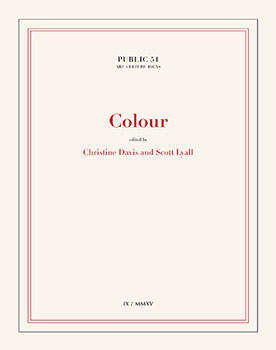
Colour is a collection of texts and images that record an attempt to think artistically about colour. Tracing a more than two-year conversation between its editors, this volume is a montage of ideas about art and colour slyly mapped against the format of a scholarly review.
PUBLIC 51 includes a series of images by Fiona Annis selected by the contributing editor Aleksandra Kaminska
232 pages, 24 x 19 cm, colour
Graphic Design: Associés Libres